

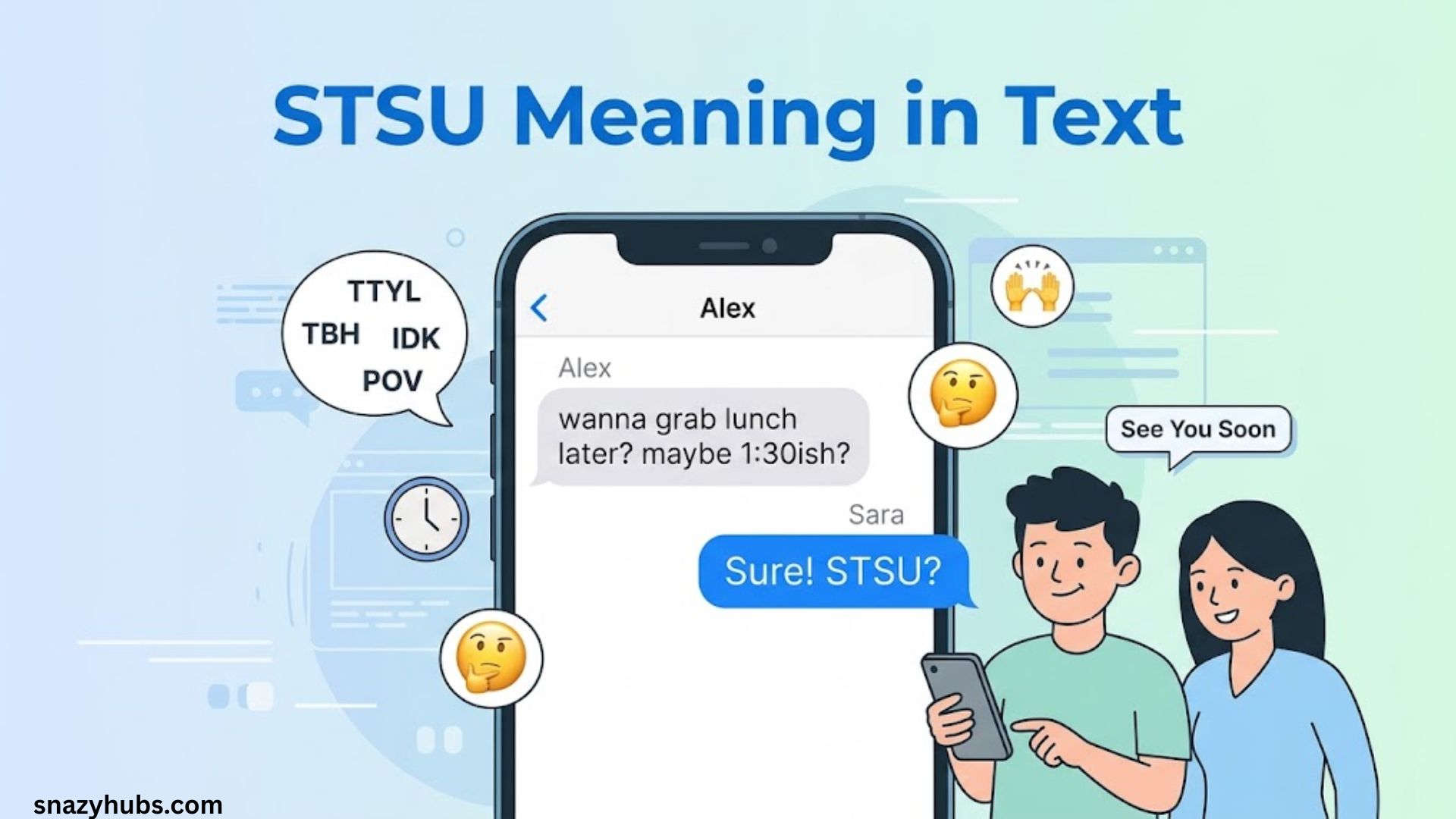
You’re scrolling through a group chat, and someone drops “STSU” right after you share a wild story. No context. No explanation. Just four letters staring back at you. So what does STSU mean in text, and should you be offended, amused, or completely confused?
You’re not the only one asking. Thousands of people type “stsu meaning in text” into Google every month, and honestly, the internet hasn’t done a great job answering them. Search for it and you’ll find a dozen different sites claiming a dozen different definitions, some of which look suspiciously made up. This guide cuts through that noise and gives you the real answer, backed by how the term actually functions in everyday texting.
The Quick Answer
Here’s the short version: STSU most commonly stands for “Shut The Stuff Up,” a cleaned-up, censored version of a much blunter phrase you’ve probably seen before (“Shut The F Up”). It works the same way “STFU” does, just with the edge sanded off so it feels less aggressive in a casual chat.
That said, STSU isn’t an official term. It doesn’t appear in Merriam-Webster, it’s barely represented in Urban Dictionary, and Acronym Finder lists it without pinning down a single accepted slang meaning. So when someone asks “what does STSU mean,” the honest answer is: it depends on who sent it, and how.
Why STSU Doesn’t Have One Official Meaning
Before diving into every possible interpretation, it helps to understand why this term is so slippery in the first place. Most texting abbreviations you already know, like “LOL” or “BRB,” settled into one meaning years ago because they got used constantly, in the same way, by millions of people. STSU never had that moment. It’s newer, smaller, and far more scattered.
It’s Not in Mainstream Slang Dictionaries
If you check the major slang references, you won’t find a confident, single definition of STSU. Acronym Finder does have an entry, but it doesn’t crown one meaning as the “correct” one. Urban Dictionary, where anyone can submit a definition, has a handful of competing entries with almost no consensus between them. That’s a pretty clear sign this term hasn’t been standardized the way older texting slang has.
How Search Content Multiplied Its “Meanings”
Here’s something worth knowing: a lot of the confusion around STSU meaning in text didn’t come from real texting habits. It came from websites racing to rank for the search term. When a phrase gets searched a lot but doesn’t have an obvious answer, some sites will invent a definition just to have something to publish. That’s likely why you’ll find STSU explained as everything from “Stick To Something” to “Send That Same Update” to “Stay True, Stay You,” definitions that sound plausible on paper but show almost no real evidence of people actually typing them that way.
The lesson here: when you’re researching internet slang, more definitions floating around doesn’t mean more accuracy. Sometimes it just means more guessing.
The Most Common Real Meaning: Shut The Stuff Up
Set the noise aside, and one interpretation holds up better than the rest across real conversations, comment sections, and group chats: STSU as a softened version of “Shut The F Up.”
Where It Comes From
This isn’t a new trick. Texters have been softening blunt phrases for decades to make them feel more acceptable in casual company. You’ve probably seen “Shut The Front Door” used instead of a much ruder phrase, or the meme-born “Shut The Smurf Up.” STSU follows that same playbook: keep the rhythm and punch of the original phrase, swap out the harsh word for something neutral, and you get an acronym that still lands but reads a little friendlier on a screen.
| Original Phrase | Softened Version | Feels Like |
|---|---|---|
| Shut The F Up | Shut The Stuff Up (STSU) | Playful, casual, less harsh |
| What The F | What The Heck (WTH) | Same pattern, older and more common |
| Oh My God | Oh My Gosh (OMG-adjacent) | Family-friendly substitution |
How Tone Changes Everything
This is the part most articles skip over, and it’s the part that actually matters. STSU doesn’t carry one fixed emotion. It flexes depending on how it’s delivered, and that flexibility is exactly why people get confused.
Used one way, it reads as excited disbelief, almost like saying “no way” or “stop it, seriously?” Used another way, in the middle of an argument or a one-word reply with no punctuation, it reads as a genuine request (or demand) for someone to stop talking.
As one frequent texter put it in a public forum thread on slang usage: “I use it when my friend tells me something wild, not when I’m actually mad. If I wanted someone to actually stop, I’d just say that.”
That distinction, excitement versus genuine annoyance, is the single most useful thing to understand about STSU meaning in texting.
Real Example Exchanges
Seeing STSU in action makes the tone difference much clearer than any definition can.
Example 1: Playful disbelief
Friend 1: “I just got upgraded to first class for free.” Friend 2: “STSU 😭 no way, teach me your ways.”
Here, STSU means something closer to “you’re kidding me,” not an actual command to stop talking.
Example 2: Genuine frustration
Person A: “You never listen when I explain things.” Person B: “STSU. Let me finish.”
No emoji, tense subject, direct reply. This version reads as a real request to stop and listen, not a joke.
Example 3: Teasing among friends
Friend 1: “I’m basically the best player on this team.” Friend 2: “STSU 😂 you lost every match last week.”
Again, playful. The laughing emoji does a lot of the work here, signaling that nobody actually wants silence.
Other Claimed Meanings, and Why They’re Shaky
Because so many sites compete to rank for “stsu meaning in text,” you’ll run into alternate definitions that sound official but don’t hold up under scrutiny. It’s worth knowing what they are and why you shouldn’t rely on them.
Stick To Something
Some articles claim STSU means “Stick To Something,” pitched as motivational texting slang for staying consistent with a goal or habit. It’s a nice idea, but there’s little to no real usage evidence behind it. It reads like a definition built backward from the letters rather than one pulled from actual conversations.
Send That Same or Send That Screenshot
A few gaming-focused sites claim STSU means “Send That Screenshot Up,” used when someone wants proof of a high score or achievement. This might exist in extremely small, specific gaming circles, but it’s far from a widespread meaning, and most gamers you ask won’t recognize it at all.
Stay True, Stay You
This one shows up on self-help and motivational-content sites, framing STSU as an empowerment phrase. Again, this looks like a backronym, a definition invented to fit the letters, rather than a phrase people organically type to each other.
Here’s a simple way to judge these claims: does the “definition” match a pattern you’ve actually seen in real texts, comments, or chats? If not, treat it as speculation, not fact.
| Claimed Meaning | How Common It Actually Is | Verdict |
|---|---|---|
| Shut The Stuff Up | Most common, matches real usage patterns | Reliable |
| Stick To Something | Rare, mostly appears in SEO content | Unverified |
| Send That Screenshot Up | Extremely niche, gaming-specific if real | Unverified |
| Stay True, Stay You | Rare, motivational-content framing | Unverified |
| Same To You / Sucks To Be You | Occasionally claimed, low real-world evidence | Weak |
How to Actually Figure Out What Someone Means by STSU
Since the letters alone won’t tell you much, you need to read the situation around them. This is true of a lot of digital slang, not just STSU, but it matters especially here because the gap between the playful meaning and the serious one is so wide.
Read the Message Before It
Context always comes first. If someone just shared exciting or surprising news, STSU almost certainly means disbelief, not anger. If the conversation was already tense before it showed up, lean toward the more literal “stop talking” reading.
Emojis and Punctuation Are the Real Signal
Emojis do a lot of heavy lifting in texting, and STSU is no exception.
- A crying-laughing emoji (😂) or shocked-face emoji (😭) usually signals a playful, excited tone.
- No emoji, paired with short or clipped sentences, tends to signal genuine frustration.
- A period right after “STSU.” reads more serious than “STSU!” or “stsu lol.”
Your Relationship With the Sender Matters Most
The same four letters land completely differently depending on who’s sending them. Between close friends who tease each other constantly, STSU is usually a joke. From someone you barely know, or in a professional setting, it reads as blunt and possibly rude, because you don’t share the shorthand or trust that softens it.
When to Use STSU Yourself, and When Not To
Knowing what STSU means is one thing. Knowing when it’s actually appropriate to type it yourself is a different skill, and it’s the part that keeps people out of awkward situations.
Fine Among Close Friends
If your friend group already uses casual, slightly edgy slang with each other, STSU fits right in. It’s quick, expressive, and gets a reaction without you having to type out a full sentence.
Risky With Strangers or Authority Figures
Avoid STSU with people who don’t already know your texting style. A coworker, a teacher, a new acquaintance, or anyone in a position of authority is far more likely to read it as rude than playful, since they don’t have the relationship context to soften it.
A simple rule that experienced texters follow: if you wouldn’t say the full phrase out loud to that person’s face, don’t send the abbreviation either.
Related Slang Worth Knowing
STSU sits inside a small family of similar abbreviations, and knowing the differences helps you use all of them more accurately.
- STFU: The original, much blunter phrase. Considered genuinely rude in most contexts.
- SMH: “Shaking my head,” used to express disappointment or disbelief without any command attached.
- IYKYK: “If you know, you know,” used for inside jokes rather than telling anyone to stop talking.
STSU sits closer to STFU in structure but softer in tone, which is exactly why it’s grown popular as a middle-ground option.
Frequently Asked Questions
What does STSU mean in a text message?
STSU most commonly means “Shut The Stuff Up,” a softened stand-in for a much blunter phrase. Depending on tone, it can express playful disbelief or an actual request for someone to stop talking.
Is STSU rude?
It can be, but it isn’t automatically. Among close friends with a joking dynamic, it usually reads as playful. Sent bluntly, with no emoji, during an argument or to someone you don’t know well, it reads as genuinely rude.
Is STSU a common slang term in the USA?
It shows up in casual American texting, especially among teens and young adults on platforms like Instagram, Snapchat, and group chats, but it’s nowhere near as universal or established as terms like “LOL” or “OMG.” It’s regional and generational rather than nationally standardized.
Could STSU be a typo?
It’s possible, though less likely than it being intentional slang. Because mobile keyboards can misfire during fast typing, always consider whether the rest of the message makes sense with STSU included. If it seems out of place, a typo or autocorrect slip is a reasonable explanation.
Why do people use unclear abbreviations like STSU?
Texting rewards speed and emotional shorthand. Four letters can carry surprise, frustration, or humor faster than typing a full sentence, and using slang that not everyone immediately understands can also signal belonging to a particular friend group or online community.
How can I understand STSU in a message?
Look at three things together: the message right before it, whether emojis or punctuation soften the tone, and your relationship with the person sending it. Those three clues will almost always tell you whether STSU means excitement or an actual request to stop talking.
What’s the difference between STSU and STFU?
STFU is the blunter, more overtly rude original phrase. STSU is a softened variation of it, designed to carry similar emotional weight without sounding as harsh, which is why it’s more common in lighthearted or mixed-company conversations.
Does STSU mean something different on TikTok or in gaming chats?
The core meaning stays largely the same across platforms, though gaming communities occasionally stretch it toward niche, less common uses. Outside of small pockets like that, “Shut The Stuff Up” remains the interpretation with the strongest real-world support.
Bottom Line
STSU doesn’t have one locked-in, dictionary-approved meaning, and if a website tells you it does, that’s worth being skeptical of. What the evidence actually supports is this: STSU most often functions as a softened version of “Shut The F Up,” used flexibly to express anything from playful disbelief to real frustration. The letters themselves won’t tell you which one you’re dealing with. The conversation around them will.
Next time STSU pops up in your messages, skip the guesswork. Check the tone of what came before it, look for emojis or punctuation clues, and think about how well you actually know the person sending it. Do that, and you’ll read the message correctly almost every time, no dictionary required.
