

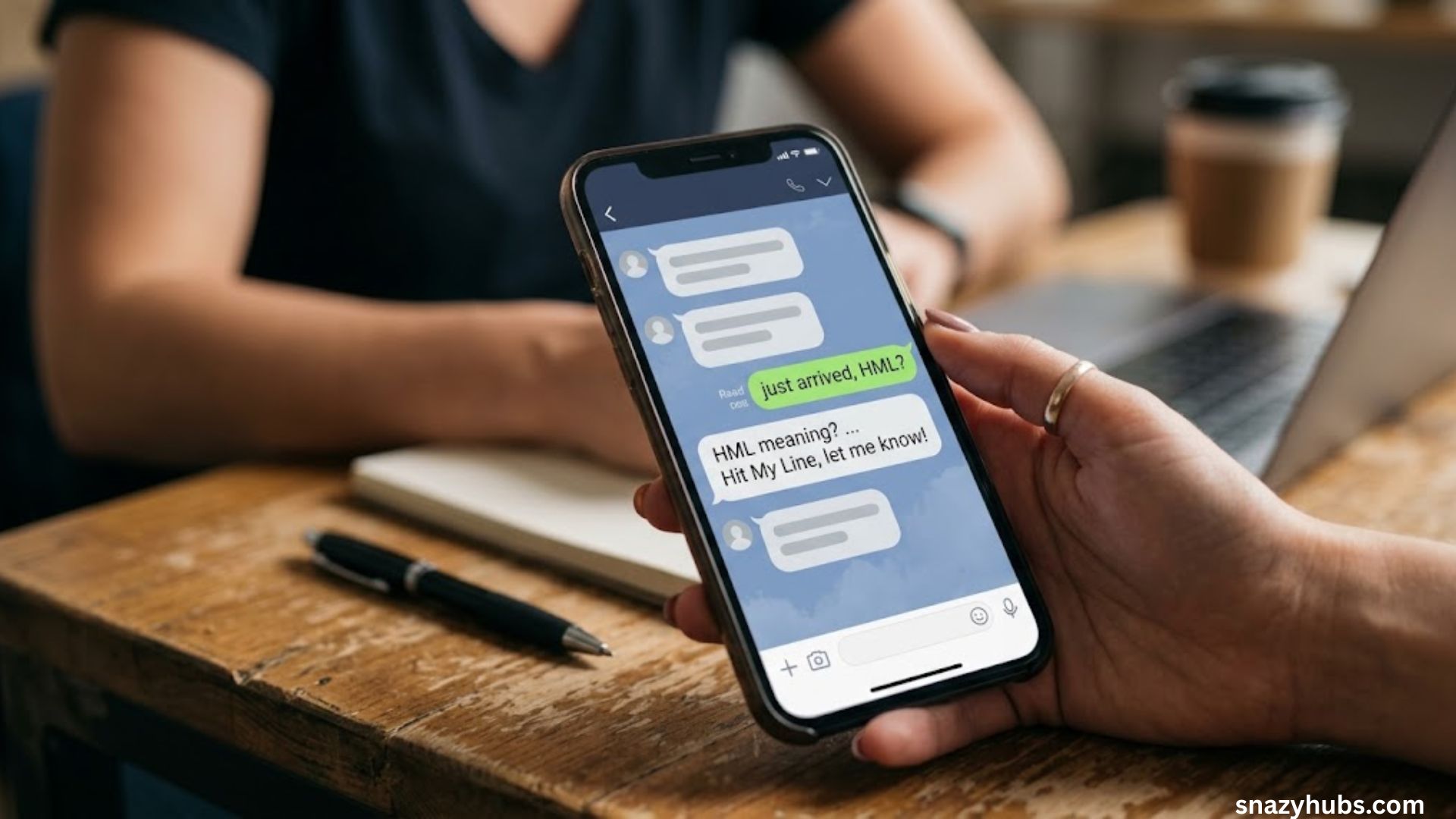
You’re scrolling through your messages, and there it is: “HML.” No context, no explanation, just three letters sitting there like they’re supposed to mean something to you. If you’ve found yourself squinting at your screen wondering what does HML mean in text, you’re in good company. This little acronym trips up more people than you’d think, mostly because it doesn’t have just one meaning.
Here’s the short version: HML meaning in text usually comes down to one of two things. It’s either “Hit My Line” (basically, “call or text me”) or “Hate My Life” (a way of venting about something annoying or frustrating). Same three letters, two completely different vibes. So how do you know which one someone means? That’s exactly what this guide breaks down, along with where the slang came from, how it’s used across different platforms, and when you should probably avoid it altogether.
Where HML Comes From
Slang doesn’t appear out of nowhere. Every abbreviation you see in your group chat has a history, and HML is no exception. Understanding the HML abbreviation actually helps you use it correctly, because the two meanings developed along completely separate paths.
“Hit my line” has roots in Black American slang and hip-hop culture. Long before smartphones existed, “line” referred to a phone line. Telling someone to “hit my line” meant calling them on that line. According to Dictionary.com, this usage of HML shows up in hip-hop lyrics, including Drake’s 2016 track “4pm in Calabasas,” and it’s been documented on Urban Dictionary since around 2010. The phrase carried over into texting once phone lines gave way to cell phones, but the meaning stuck: reach out, get in touch, call me up.
“Hate my life” grew out of a different internet tradition entirely. Back in the early-to-mid 2000s, a small family of acronyms popped up to express frustration in shorthand: FML (“f*** my life”), LML (“love my life”), and HML sitting somewhere in the middle as a milder version of FML. Dictionary.com traces “hate my life” HML back to the internet in the 2000s, appearing on Urban Dictionary by 2006 and spreading on Twitter by 2008.
Here’s a quick table showing how these two meanings evolved on completely different tracks:
| Meaning | Origin | Era | Cultural Roots |
|---|---|---|---|
| Hit My Line | Phone/street slang | Pre-2000s, texting adoption ~2010 | Hip-hop, Black American vernacular |
| Hate My Life | Internet acronym culture | Early-to-mid 2000s | SMS shorthand, FML/LML family |
So when you’re trying to figure out HML in text communication, it helps to remember these aren’t variations of the same idea. They’re two unrelated phrases that happen to share the same three letters, kind of like how “bat” can mean a flying mammal or a piece of sports equipment. Context does all the heavy lifting.
Meaning #1: “Hit My Line” (Contact Me)
This is the meaning you’ll run into most often in casual texting slang, especially among younger users. When someone sends you HML meaning Hit My Line, they’re basically leaving the door open. It’s low-pressure, low-commitment, and doesn’t demand an immediate response. Think of it as the texting equivalent of saying “swing by sometime.”
What it signals:
- An invitation to call, text, or message
- Availability (“I’m around, reach out”)
- Sometimes a subtle way of showing interest, especially in dating contexts
Here’s how it plays out in real conversations:
Friend: I’m free tonight if you want to do something. You: Nice, HML later and we’ll figure it out.
Person A: Loved your story today. Person B: Thanks! HML sometime, we should catch up.
Story caption: Bored rn, HML.
Notice the tone in each example. Nothing dramatic, nothing urgent, just an open invitation. That’s the core of what HML stands for in this context: a friendly nudge toward more conversation, not a cry for help.
Meaning #2: “Hate My Life” (I’m Frustrated)
Now flip the script. The HML meaning Hate My Life version shows up when someone’s venting about something that annoyed them, embarrassed them, or just ruined their day. It’s rarely meant literally. Nobody typing “HML” after failing a pop quiz actually means their entire existence is unbearable. It’s closer to an exaggerated shrug than an actual confession of despair.
What it signals:
- Frustration over something small or moderately annoying (a bad grade, an awkward moment, a long day at work)
- Sarcasm or dark humor more than genuine distress
- A way to commiserate with friends without writing a whole paragraph
Real examples of this version in action:
Text 1: My parents saw my grades. HML.
Text 2: Failed my test again. HML.
Text 3: Working a double shift on my day off. HML.
Here’s the important part: this meaning is casual by design. It’s built for minor complaints, not genuine mental health struggles. If someone is dealing with real depression, anxiety, or thoughts of self-harm, “HML” isn’t the right way to communicate that, and it’s not the right way to respond to it either. Slang like this works because everyone silently agrees it’s not that serious. Using it, or reading it, as though it carries real weight can create confusion or minimize something that actually needs direct conversation and support.
How to Tell Which Meaning Someone Means
This is probably the question people search for the most: how do you decode HML in messages when the same three letters can mean two opposite things? The good news is that once you know what to look for, it becomes second nature. Here’s a simple checklist for figuring out HML meaning depending on context.
Ask yourself these three things:
- What came before it? Was the previous message a complaint, or was it neutral and inviting? “Ugh, spilled coffee on my shirt, HML” reads very differently from “Missed you today, HML.”
- What’s the emotional tone? Exclamation points, laughing emojis, and upbeat language usually point to “Hit My Line.” Sighs, frustrated punctuation, or venting language point to “Hate My Life.”
- Where is it posted? A story caption complaining about a rough day likely means “Hate My Life.” A comment under someone’s selfie saying “HML” is almost always “Hit My Line.”
Here’s a side-by-side to make it even clearer:
| Clue | Hit My Line | Hate My Life |
|---|---|---|
| Tone | Friendly, upbeat | Frustrated, sarcastic |
| Preceding message | Invitation or compliment | Complaint or bad news |
| Common punctuation | None or casual | Exclamation, ellipsis |
| Typical response | “Okay, I’ll message you” | “That sucks, what happened?” |
| Platform pattern | DMs, comments, captions inviting contact | Story captions, group chat vents |
When in doubt, the safest move is just to ask. “HML meaning Hit My Line, right?” takes two seconds and saves you from replying “aw, that’s so sweet!” to someone who just failed their driving test for the third time.
Where You’ll See HML in the Wild
HML social media meaning shifts slightly depending on the platform, though the two core definitions stay the same. Here’s a breakdown of how HML in text messages and HML in messages generally shows up across different apps and situations.
On Instagram and TikTok: HML often appears in comments and captions, usually as an invitation to DM or start a conversation. HML meaning in TikTok comments and HML meaning in Instagram captions both lean heavily toward “Hit My Line,” since these platforms are built around engagement and connection.
On Snapchat: HML meaning in Snapchat can go either way, but “Hit My Line” is more common here too, often used to encourage someone to send a snap or reply to a story.
In group texts: This is where “Hate My Life” shows up most, usually as a shared complaint. Someone vents about a bad day, and “HML” becomes shorthand for “you get it, don’t make me explain further.”
In dating contexts: HML meaning in casual texting between people who are into each other usually leans toward “Hit My Line,” functioning almost like a subtle green light to keep talking.
Geographically, HML meaning in American texting culture is where this slang is most deeply rooted, largely because both origin stories (hip-hop slang and 2000s internet acronyms) trace back to U.S. youth culture. That said, thanks to TikTok and global social media reach, HML meaning in online chats has spread well beyond the U.S., even if recognition is still strongest among American Gen Z and younger Millennials.
Quick summary of platform tendencies:
- Instagram comments/captions: mostly “Hit My Line”
- TikTok comments: mostly “Hit My Line”
- Snapchat: mostly “Hit My Line,” occasional “Hate My Life”
- Group texts/private chats: split between both, leaning toward “Hate My Life” for venting
- Dating apps/DMs: almost always “Hit My Line”
When Not to Use HML
Not every message calls for slang, and knowing when to skip it is just as useful as knowing what it means. A few situations where HML texting slang doesn’t belong:
Professional or work communication. If you’re emailing a coworker or messaging a client, “HML” reads as unclear at best and unprofessional at worst. Stick to plain language like “feel free to reach out” or “let me know if you’d like to chat.”
Conversations with people unfamiliar with slang. Older relatives, coworkers outside your usual friend group, or anyone who doesn’t spend much time on TikTok or Instagram might have no idea what you mean. Clarity beats sounding trendy.
Genuine emotional or mental health conversations. As mentioned earlier, “Hate My Life” works fine for a bad commute or an annoying group project. It’s the wrong tool for expressing real distress. If you or someone you know is going through something serious, direct language and a real conversation matter far more than an acronym built for casual venting.
HML vs. Similar Slang
Because so many texting abbreviations revolve around communication and mood, it’s easy to mix HML up with its cousins. Here’s how it stacks up against a few related terms:
| Acronym | Meaning | Tone | Typical Use |
|---|---|---|---|
| HML | Hit My Line / Hate My Life | Friendly or frustrated | Invitation to contact, or venting |
| HMU | Hit Me Up | Friendly, broader | Similar to “Hit My Line,” but can mean contact me for anything (plans, questions, favors) |
| FML | F*** My Life | Frustrated, more intense | Stronger complaint than “Hate My Life” |
| LML | Love My Life | Positive | The upbeat opposite of FML and HML’s negative meaning |
The main difference between HML and HMU comes down to scope. “Hit My Line” leans slightly more personal, often tied to phone calls or direct messaging, while “Hit Me Up” is more general and can apply to almost any kind of contact, including asking someone to hang out or help with something. In everyday use, though, plenty of people treat them as interchangeable.
HML Meaning for Teens and Young Adults vs. Older Generations
Slang doesn’t age the same way for everyone, and HML meaning for teens and young adults looks pretty different from how (or whether) older generations use it. If you’ve ever sent “HML” to a parent or older coworker and gotten a confused “what?” back, this is why.
Gen Z and younger Millennials grew up texting in a world already shaped by character limits, emoji culture, and constant abbreviation. For this group, HML in text communication feels as natural as writing “lol” or “omg.” It’s rarely a conscious choice; it’s just how casual conversation flows. Teens especially lean on the “Hit My Line” meaning in social settings, using it to keep the door open for future plans without committing to anything specific right now.
Older Millennials and Gen X, by contrast, may recognize “hit my line” from hip-hop lyrics or early-2000s slang but rarely use the compressed HML abbreviation itself in daily texting. They’re more likely to type out “call me” or “hit me up” in full.
Older generations (Boomers and older Gen X) often have little to no familiarity with HML at all. If they encounter it, they’re more likely to interpret it literally or ask for clarification, since the acronym never entered their everyday vocabulary the way it did for younger texters.
This generational gap matters practically. If you’re texting a group chat with people of different ages, like a family thread, it’s worth spelling things out rather than assuming everyone tracks the HML meaning in casual texting the same way you do. A quick “call me later” avoids the awkward follow-up question of “wait, what does that mean?”
HML in Modern Digital Communication
Slang doesn’t stay static, and HML meaning in modern digital communication has shifted slightly as messaging habits evolve. A few trends worth knowing:
- Voice notes and video messages haven’t replaced it. Even as apps add richer ways to communicate, quick text-based invitations like HML remain popular because they’re fast and low-effort.
- It’s becoming platform-agnostic. What started as SMS shorthand now shows up just as often in Instagram DMs, TikTok comments, and Snapchat captions as it does in traditional text messages.
- The “Hit My Line” meaning has become the dominant one. While “Hate My Life” hasn’t disappeared, most current usage across social platforms leans toward the invitation-to-connect meaning rather than the venting one, largely because it fits so naturally into comment sections and captions built around encouraging interaction.
- It still carries a slightly nostalgic, hip-hop-rooted flavor. Even used casually online, HML retains a trace of its origins in Black American vernacular and phone-line-era slang, which is part of why it feels distinctly different from more neutral abbreviations like “TTYL” or “BRB.”
Understanding where a piece of slang like this sits in the broader picture of digital communication helps explain why it hasn’t faded out the way some older texting abbreviations have. It still does a job that full sentences do less efficiently: opening a conversation without demanding an immediate reply.
A Quick Case Study: Reading the Room
To show how this plays out in real life, here’s a short exchange that demonstrates how context changes everything:
Person A: I’m going through a lot right now. Person B: I’m here for you. HML anytime, seriously.
In this case, HML clearly means “Hit My Line,” used as a supportive gesture rather than a casual invitation. Compare that to:
Person A: Just found out I have to redo this whole project. Person A: HML.
Here, there’s no invitation implied at all. It’s a standalone complaint, which makes “Hate My Life” the obvious read. The words around HML, not the acronym itself, carry the real meaning.
FAQs
What does HML mean in text? HML usually stands for either “Hit My Line” (an invitation to contact someone) or “Hate My Life” (an expression of frustration). Which one applies depends entirely on the surrounding message and tone.
Is HML a positive or negative term? It can be either. “Hit My Line” is generally friendly and inviting, while “Hate My Life” expresses annoyance or disappointment. Neither meaning is considered offensive.
Where is HML commonly used? HML shows up most on Instagram, TikTok, Snapchat, and in group texts, particularly among Gen Z and younger Millennials. It’s especially common in American texting culture, though it has spread internationally through social media.
Can HML be used in professional messages? No. HML is informal slang and doesn’t belong in work emails, client messages, or formal communication. Full sentences like “please contact me” work better in those settings.
Why do people use HML instead of full words? Shorthand like HML saves time and characters, which matters in fast-paced texting and on platforms with character limits, like Twitter/X. It also signals familiarity with current slang, especially among teens and young adults.
The Bottom Line
At the end of the day, HML meaning in text comes down to two very different phrases sharing the same three letters: “Hit My Line” for reaching out, and “Hate My Life” for venting. Neither meaning is complicated once you know to check the tone and context around it. Use it with friends who’ll understand it, skip it in professional settings, and when the situation actually calls for real support rather than casual slang, put the acronym aside and just talk it out directly.
