

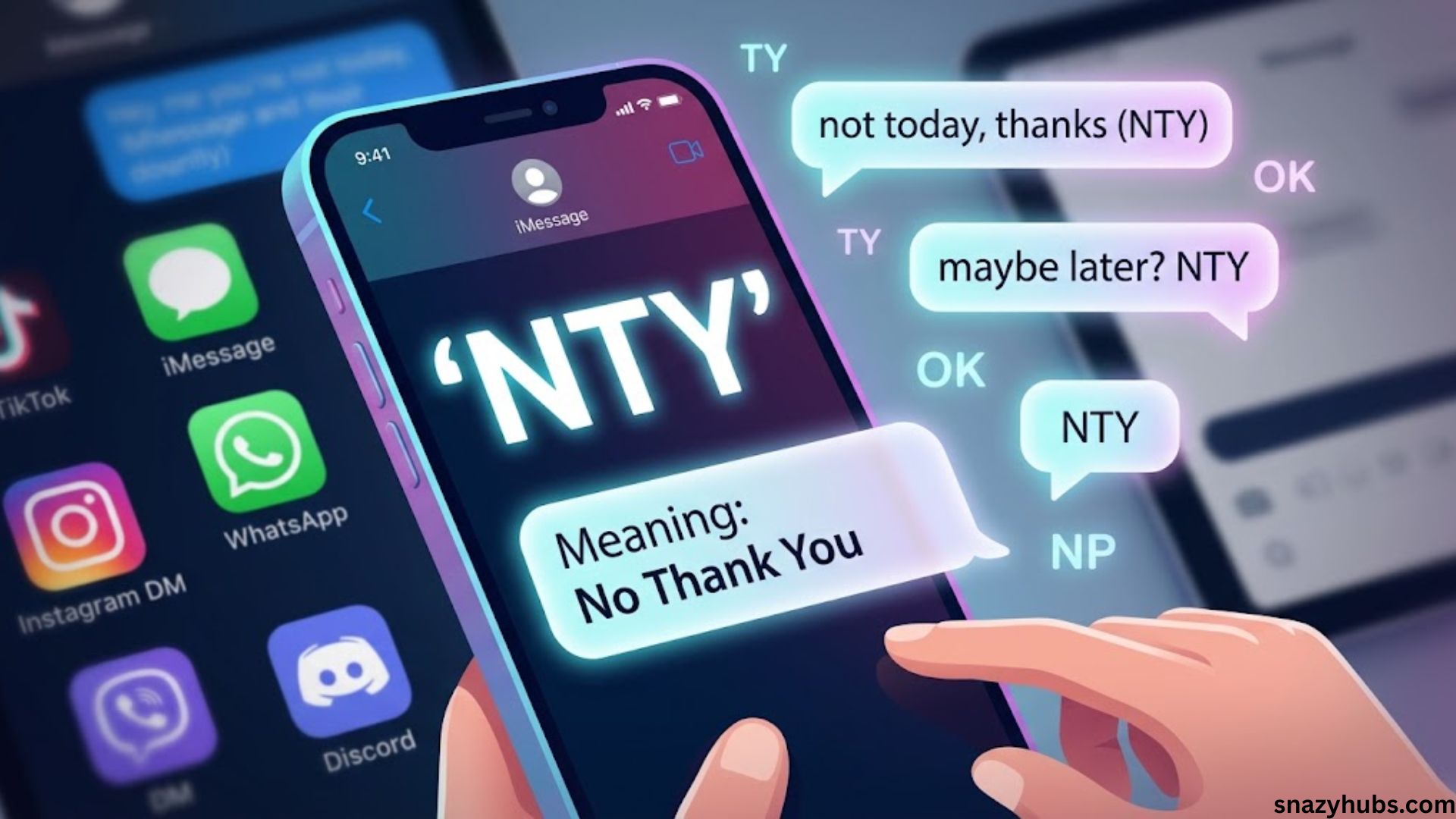
You’re scrolling through a group chat, and someone drops a reply that’s just three letters: “nty.” No explanation, no punctuation, nothing else. If you’ve never seen it before, it can feel like a secret code. It isn’t. Once you know the NTY meaning in text, you’ll spot it everywhere, and you’ll probably start using it yourself.
Quick Answer
NTY stands for “No, Thank You.” That’s it. No hidden meaning, no alternate secret definition floating around online forums. People use it to turn down an offer, an invitation, or a suggestion without typing out a full sentence. It works in both uppercase and lowercase, so “NTY” and “nty” mean exactly the same thing.
Here’s a quick example of NTY usage in a real text exchange:
Friend: “Want to split a pizza tonight?” You: “nty, already ate lol”
Simple, quick, and polite enough to avoid sounding harsh. That’s the whole appeal of this little abbreviation, and it’s why it keeps showing up across texting, gaming, and social media.
What NTY Stands For
Let’s get the basics locked down before digging into anything else. NTY is an initialism, which means each letter stands for the first letter of a word in a phrase. In this case:
- N = No
- T = Thank
- Y = You
Put together, you get “No Thank You,” minus the comma and minus the extra keystrokes. According to Wiktionary, NTY is classified as internet slang and text messaging shorthand, specifically an initialism of “no thank you.” That’s about as close to an official definition as internet slang gets, since there’s no governing body that approves texting abbreviations. Instead, meanings get established through repeated, consistent use, and NTY has stayed remarkably consistent since it first appeared.
How It’s Capitalized and Written
One thing worth clearing up: capitalization doesn’t change the NTY meaning at all. You’ll see it written as:
- NTY (all caps, often used for emphasis or in older internet slang traditions)
- nty (lowercase, more common in casual texting today)
- Nty (rare, but occasionally shows up as a typo or autocorrect artifact)
None of these variations change what the abbreviation means. Texting culture, in general, treats capitalization pretty loosely. Full caps sometimes signal shouting or urgency in other contexts, but with short abbreviations like NTY, it’s mostly just a stylistic choice rather than a tone shift.
Where NTY Came From
Every piece of internet shorthand has a starting point, even if it’s fuzzy. NTY’s origin traces back further than most people assume, and it didn’t start on TikTok or Snapchat. It started in gaming culture, long before those apps existed.
Early 2000s Gaming and Chat Roots
The earliest documented use of NTY dates to 2005, when it appeared on Urban Dictionary with a definition tied to online gaming culture, specifically referencing the multiplayer shooter Counter-Strike. At that point, online gaming communities were already deep into building their own shorthand vocabulary, because in-game chat boxes were small, typing speed mattered, and players needed to communicate fast without breaking focus on the match.
Trading and negotiation scenarios inside games created the perfect environment for NTY to take hold. Picture a player offering an item, a weapon skin, or in-game currency to another player. The recipient doesn’t want the deal. Typing out “No, thank you, I’m not interested in that trade” takes time nobody has mid-match. Typing “nty” takes about one second, and it gets the same message across.
Why Gamers Needed a Faster No
Speed wasn’t the only factor. Politeness mattered too, even in fast-paced gaming lobbies. A blunt “no” can come across as dismissive or even hostile, especially in text form where tone doesn’t come through the way it does in speech. NTY solved two problems at once:
- It saved time, which mattered in real-time gaming environments.
- It preserved politeness, since the phrase still technically says “thank you.”
That combination, quick but courteous, is exactly why the abbreviation didn’t die out once the specific games that popularized it faded. It had a job to do that extended well beyond Counter-Strike lobbies.
How It Spread From Gaming Into Mainstream Texting
As instant messaging platforms, early social networks, and eventually smartphones took over daily communication, gaming slang didn’t stay locked inside gaming communities. Terms like GG (good game), AFK (away from keyboard), and NTY all leaked into general internet shorthand because the people using them in games were the same people texting friends, posting on forums, and later, using apps like Instagram and Snapchat.
By the time texting became the default way people communicated day to day, NTY had already proven itself useful. It didn’t need to be reinvented. It just needed a new audience, and it found one quickly among texters who wanted the same thing gamers wanted: a fast, polite way to say no.
How NTY Is Used Today
The historical origins of NTY in digital communication explain why it exists, but the modern picture is where most people actually encounter it. NTY in texting today shows up across a wide range of situations, and the core function hasn’t changed much since 2005: politely declining something.
NTY in Texting and Direct Messages
This is the most common context for NTY today. Friends use it to decline plans, family members use it in casual group chats, and it shows up constantly in one-on-one conversations where someone’s offering something the other person doesn’t want.
- “Want a ride to the airport?” → “nty, my brother’s already picking me up”
- “Should I save you a seat?” → “nty I’m sitting with Jess”
- “Free samples at the front, want one?” → “nty, allergic to nuts”
NTY in Social Media Comments and Replies
On platforms like TikTok, Instagram, and Twitter/X, NTY frequently shows up in comment sections and direct messages, especially in reply to unsolicited offers, spam-like promotions, or unwanted suggestions. NTY in social media culture tends to function almost like a digital brush-off, quick, low-effort, and clear enough that the other person gets the message without a lengthy explanation.
NTY in Gaming and Online Marketplaces
The gaming roots never disappeared. On platforms like Roblox, and in online trading or marketplace conversations more broadly, NTY still functions exactly as it did in 2005: a fast way to reject a trade or offer. Anyone buying or selling items in online marketplaces, whether that’s collectibles, game items, or secondhand goods through apps, will run into NTY regularly from people passing on a deal.
NTY in Dating App Conversations
This is a more recent, but very real, use case. On dating apps, NTY meaning in dating app conversations usually signals a polite rejection without inviting further back-and-forth. Someone might use it to decline a suggestion for a specific date idea, a request to move the conversation to another platform, or an unwanted follow-up message. It keeps things brief without escalating into an uncomfortable exchange.
Here’s a table breaking down where NTY usage shows up most, and what it typically means in each setting:
| Platform or Setting | Typical Use Case | Common Tone |
|---|---|---|
| Texting and DMs | Declining plans, invites, or offers | Casual, friendly |
| Gaming chat and trades | Rejecting a trade or in-game offer | Quick, transactional |
| Instagram and TikTok comments | Dismissing spam or unwanted suggestions | Neutral to blunt |
| Online marketplaces | Passing on a deal or listing | Practical, businesslike |
| Dating apps | Politely declining a suggestion or request | Polite but final |
| Group chats | Turning down a group plan or suggestion | Casual, sometimes playful |
Tone: Why NTY Can Read as Polite or Cold
This is where NTY meaning in text gets genuinely interesting, because the words themselves say “thank you,” but the shortened form can read very differently depending on context. Understanding this is probably more useful than memorizing the definition itself.
What Makes NTY Feel Polite
The phrase still includes gratitude, even in abbreviated form. Compare these two responses to the same question:
- “no”
- “nty”
The second one, despite being only one letter longer, feels noticeably softer. It acknowledges the offer was made, even while declining it. That small courtesy is why NTY became popular in the first place, and it’s part of why it’s still considered one of the more polite abbreviations in texting, especially compared to blunter alternatives like “hard pass” or “no way.”
What Makes NTY Feel Abrupt or Cold
Text messages strip out tone of voice, facial expressions, and body language, which means short replies can land differently than intended. NTY, sent with no punctuation, no emoji, and no follow-up explanation, can come across as dismissive, even if that wasn’t the sender’s intention. A coworker inviting you to lunch who gets back a flat “nty” might read that as a brush-off rather than a genuine, friendly decline.
Context does most of the heavy lifting here. The same three letters sent to a close friend in a fast-moving group chat feel totally different from the same three letters sent in reply to a heartfelt invitation from a family member.
How to Soften NTY When Tone Matters
A few small additions go a long way toward keeping NTY friendly:
- Add a reason: “nty, I’ve got a ton of work today”
- Add an emoji: “nty 😅”
- Add a follow-up: “nty, but next time for sure!”
These tweaks preserve the speed of NTY while removing the risk of sounding dismissive. It’s a small habit, but it makes a noticeable difference in how the message gets received.
NTY vs. Similar Abbreviations
Texting abbreviations tend to cluster in families, with several similar-looking terms all doing slightly different jobs. Confusing them is a common mistake, so here’s a direct comparison.
| Abbreviation | Meaning | Tone | Typical Setting |
|---|---|---|---|
| NTY | No, thank you | Polite, neutral | Casual chats, gaming, social media |
| NT | Nice try (different meaning entirely) | Playful or sarcastic | Gaming, especially after a failed attempt |
| TBNT | Thanks, but no thanks | Slightly more assertive | Declining offers more firmly |
| Nah | Informal no | Casual, relaxed | Friends, low-stakes conversations |
| Pass | Declining without much detail | Neutral to playful | Group decisions, casual offers |
| I’m good | Soft, indirect decline | Warm, gentle | Any casual setting |
The NTY and NT Mix-Up
This is worth calling out specifically, because it’s one of the most common points of confusion around NTY. NT does not mean the same thing as NTY. NT typically stands for “nice try,” often used in gaming after a teammate attempts something and fails, something like a missed shot or a failed play. NTY means “no, thank you.” One extra letter completely changes the message.
Mixing these up can cause real confusion. Someone typing “nt” to encourage a teammate after a near-miss could easily be misread as sending “nty,” which would come across as a sarcastic dismissal instead of encouragement. When in doubt, it’s worth double-checking which one you’re typing, especially in fast-paced gaming chats where a quick typo changes the entire meaning of what you’re saying.
When to Use NTY, and When Not To
Not every setting calls for text abbreviations, and NTY is no exception. Knowing where it fits, and where it doesn’t, keeps your digital communication clear and appropriate.
Good contexts for NTY usage:
- Texting friends or close contacts
- Gaming chats and in-game trading
- Casual group chats
- Quick replies on social media
- Low-stakes decisions, like declining a snack or a small favor
Contexts where NTY should be avoided:
- Professional emails or workplace communication with clients
- Formal requests, especially in writing that represents a business
- Sensitive or emotional conversations, where a full response shows more care
- Messages to people unfamiliar with texting slang, like older relatives or new contacts
A simple rule of thumb: if the relationship or setting calls for formality, spell it out. “No, thank you” takes only a few extra seconds to type, and it avoids any risk of the message being misread or seeming careless.
Common Misreadings of NTY
Because NTY is short, a few incorrect guesses circulate about what it might stand for. None of these hold up, but they’re worth addressing directly since people do search for them.
- “Not To You” — Not a real meaning. This guess likely comes from people trying to reverse-engineer the letters without context.
- “Need To Yell” — Also not accurate. There’s no documented usage supporting this interpretation anywhere in texting or gaming culture.
- Airport or language codes — NTY is technically also the IATA code for Pilanesberg International Airport in South Africa, and separately, an ISO code for the Mantsi language. These are real but completely unrelated to texting slang, and virtually nobody encounters them in a casual chat setting.
The most accurate and consistently used meaning, by a wide margin, remains “no, thank you.” Any other interpretation you come across online is either a joke, a guess, or an unrelated technical code that has nothing to do with digital communication or texting culture.
Frequently Asked Questions
What does NTY mean in text messages?
NTY means “no, thank you.” People use it to politely decline an offer, invitation, or suggestion without typing out the full phrase.
Is NTY rude or polite?
Generally polite, though tone depends heavily on context. Because it includes “thank you,” it’s softer than a flat “no,” but sending it without any warmth, punctuation, or explanation can occasionally come across as abrupt, especially to someone who doesn’t know the person well.
What’s the difference between NTY and NT?
NTY means “no, thank you.” NT means “nice try,” and it’s typically used to encourage someone after a failed attempt, especially in gaming. They look similar but mean completely different things, so mixing them up can cause real confusion.
Should I use NTY in a work email?
No. NTY works well in casual digital communication, texting, gaming, and social media, but it’s too informal for professional settings. Spell out “no, thank you” in emails or formal messages instead.
Does NTY mean anything besides “no, thank you”?
In everyday texting, gaming, and social media, no. That’s the consistent, widely recognized NTY meaning. Outside of digital slang, NTY does show up as an airport code and a language code, but those uses are entirely unrelated to texting and won’t come up in normal conversation.
Where is NTY commonly used?
NTY shows up across texting apps, gaming platforms, social media comment sections, online marketplaces, and dating apps. Wherever people need a fast, polite way to decline something in writing, NTY tends to appear.
Why do people use NTY instead of typing the full phrase?
Speed and habit, mostly. Typing three letters takes a fraction of the time it takes to type “no, thank you,” and once an abbreviation becomes familiar within a community, like it did in gaming culture, it naturally carries over into everyday texting and online communication.
Bottom Line
NTY is about as straightforward as internet shorthand gets. It means “no, thank you,” it traces back to early gaming and chat culture in the mid-2000s, and it’s stuck around because it does exactly what people need: decline something quickly without sounding harsh. The only real trick to using it well is paying attention to context. Keep it for casual texting, gaming, and social media, add a little warmth when the relationship calls for it, and save the full phrase for anything formal. Once you’ve got that down, you’ll never second-guess a stray “nty” in your messages again.
